
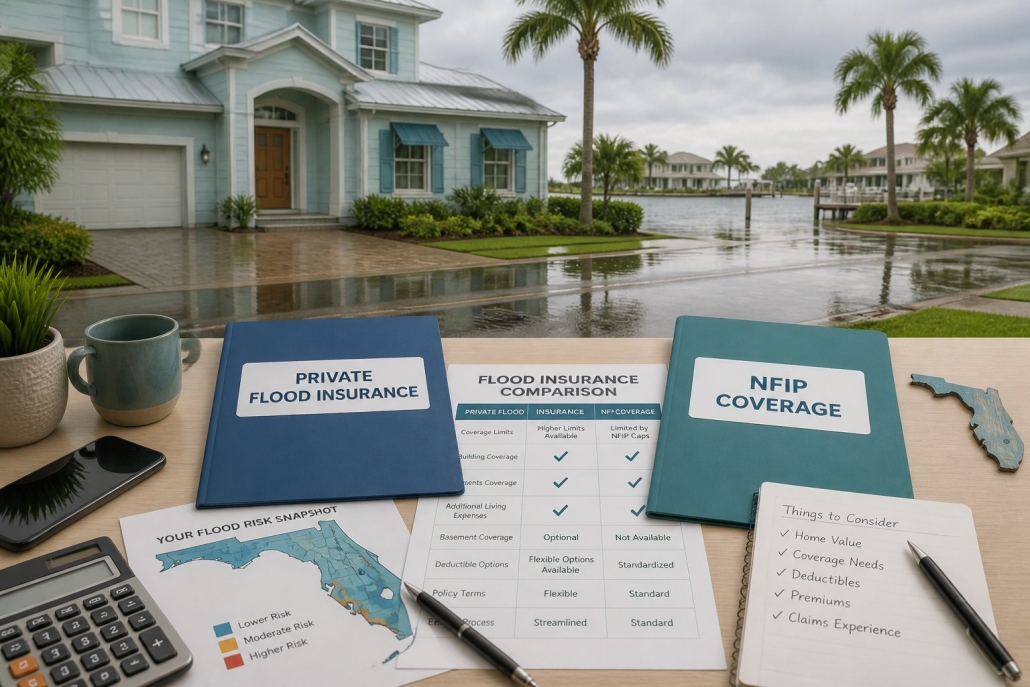
Private Flood Insurance in Florida: Is It Better Than NFIP Coverage?
You just got your flood insurance renewal notice, and the number made you sit down twice.
Maybe your NFIP premium jumped again, or your lender flagged a flood zone you did not know your house sat in. You are not alone, and you do have more choices than a single federal policy. Private flood insurance in Florida has grown into a real, competitive market, and understanding how it stacks up against the National Flood Insurance Program can change how much you pay and what you actually get back after a storm.
In this guide you will discover how flood zones affect your requirements, what separates a private flood policy from an NFIP policy, and which coverage details matter most before hurricane season tests your roof and your patience.
Why a Separate Flood Policy Matters in Florida
Standard homeowners insurance in Florida does not pay for flood damage, no matter how the water got into your house. That gap catches new residents and longtime Florida homeowners off guard every year.
What Standard Homeowners Insurance Does and Does Not Cover
A standard homeowners policy protects against fire, wind, theft, and many other sudden events. It typically excludes flooding caused by rising water, storm surge, or overflow from rivers and canals.
This matters because flood damage and wind damage often happen during the same storm. An adjuster may need to separate what the wind did from what the flood did, which can slow down a claim if you only carry one type of coverage.
- Homeowners policy: covers wind, fire, theft, and many liability claims
- Flood policy: covers rising water, storm surge, and flood-driven damage
- Neither policy alone: fully protects a Florida home during hurricane season
Knowing this split raises the next question: where does Florida flooding actually come from, and is it only a coastal problem?
Florida Flooding Risks Beyond the Coast
Florida flooding is not only a beachfront concern. Hurricanes and tropical storms bring heavy rainfall that overwhelms drainage systems far from the shoreline.
Inland flooding from slow-moving storms has damaged homes in areas that never saw storm surge. Flat terrain and limited elevation change across much of the state mean water has fewer places to go.
Flood exposure also comes from canals, retention ponds, and aging drainage infrastructure in older neighborhoods. A property miles from the ocean can still face serious flood losses during a wet season.
The real question becomes whether your specific address requires coverage, or whether it is simply a smart precaution.
When Flood Coverage Is Required and When It Is Still Worth Considering
Flood insurance requirements in Florida depend mostly on your flood zone and your mortgage, not on personal preference. Some homeowners must carry it; others should carry it anyway.
Mortgage Rules for High-Risk Areas
If your home sits in a high-risk flood zone and you have a federally backed mortgage, flood insurance is mandatory. This applies to loans backed by FHA, Fannie Mae, or Freddie Mac.
A high-risk flood zone, often called a Special Flood Hazard Area or SFHA, is an area FEMA has identified as having a significant chance of flooding each year. Lenders confirm this designation before closing and can require proof of an active policy.
Skipping this requirement is not really an option if you want the loan funded. Lenders monitor flood zone status for the life of the loan, not just at closing.
Citizens Policyholder Requirements
Citizens Property Insurance Corporation, Florida’s insurer of last resort, is phasing in a flood insurance requirement for personal residential policyholders who carry wind coverage, regardless of flood zone.
As of January 1, 2026, the requirement applies to homes with a Coverage A (dwelling) value of $400,000 or more, and the threshold is scheduled to drop further until it covers all remaining Citizens wind policyholders by January 1, 2027. This shift reflects Florida’s broader effort to reduce the state’s exposure to uninsured flood losses. If you hold a Citizens policy, it is worth confirming exactly where your home falls on this phase-in schedule.
Why Zone X Homes Can Still Flood
Zone X properties sit outside the mapped high-risk floodplain, and flood insurance is not required there by most lenders. That does not mean the flood risk is zero.
A notable share of Florida flood claims each year come from Zone X homes, often after unusually heavy rain events. Waiving coverage because a lender does not demand it can leave a real financial gap.
- High-risk zones: flood insurance required by federally backed lenders
- Zone X: not required, but voluntary coverage still protects against real losses
- Citizens policyholders: may face new flood requirements regardless of zone
Once you know whether coverage is required or simply wise, the next step is understanding exactly how FEMA draws these zone lines.
How FEMA Flood Zones Shape Your Decision
FEMA flood zones tell you how likely your property is to flood in a given year, and that likelihood drives both requirements and pricing. Reading your zone correctly saves confusion later.
High-Risk Zones A and AE Explained
Zone A and Zone AE both represent high flood risk from rivers, heavy rain, or nearby water bodies. Zone AE includes a calculated Base Flood Elevation, the height floodwater is expected to reach during a major flood event.
Homes in these zones typically pay higher premiums than lower-risk areas. Knowing your first floor height compared to the Base Flood Elevation can meaningfully affect your rate.
Coastal Zone VE and Wave Exposure
Zone VE applies to coastal areas facing storm surge with added wave action. These properties face the highest flood insurance costs in Florida due to combined water and wave force risk.
Homes built on pilings or elevated foundations in Zone VE often see better pricing than slab homes at the same address. Construction type carries real weight in this zone specifically.
Zone AO and Zone X in Plain English
Zone AO applies to areas with shallow flooding, often from poor drainage rather than a nearby large water body. Zone X, as covered earlier, represents low-to-moderate risk outside the mapped floodplain.
Neither zone eliminates the need to think carefully about flood coverage. Drainage-driven flooding in Zone AO areas can still cause significant repair costs after a hard rain season.
How to Check a Property’s Current Map
You can look up any Florida address using the FEMA Flood Map Service Center to confirm the current flood zone designation. Maps are updated periodically, so a property’s zone can change over time.
Requesting an elevation certificate for your home, if one does not already exist, gives your agent hard data to work with. This document can directly affect your flood insurance premiums.
Once your zone is confirmed, the real comparison begins: how does a private flood policy actually differ from an NFIP policy on paper?
Private Policies and the NFIP: Key Coverage Differences
Private flood insurance and NFIP coverage protect against the same basic risk, but the details of what they pay and how much can differ meaningfully. Reading both policies side by side is the only way to know which fits your home.
Federal Program Limits and Core Protections
NFIP flood insurance caps building coverage at $250,000 and contents coverage at $100,000. For many Florida homes, especially newer or larger builds, that building limit falls short of full replacement cost.
The NFIP is backed by the federal government and accepted by virtually every mortgage lender in Florida. That reliability matters at closing, and claims processes follow a standardized federal structure.
Where Private Coverage May Offer More Flexibility
Private flood insurers can offer building coverage up to a home’s full replacement cost, which matters for higher-value Florida properties. Some private flood policies also include additional living expenses, a benefit NFIP does not offer.
Private flood coverage sometimes extends to detached garages or additional structures more broadly than NFIP allows. Costs vary significantly by carrier, property, and flood zone, so no private policy is automatically cheaper than an NFIP policy.
- NFIP: federally backed, capped limits, broad lender acceptance
- Private flood: potentially higher limits, broader extras, lender acceptance varies by carrier
- Both: require comparing actual quotes for your specific address
Waiting Periods, Lender Acceptance, and Policy Stability
NFIP policies generally carry a standard 30-day waiting period before coverage takes effect, with exceptions for mortgage closings, newly mapped properties, and a few other specific situations. Private flood insurers sometimes offer shorter waiting periods, though this varies by company.
Not every mortgage lender accepts every private flood policy, so confirming acceptance before switching protects your closing timeline. Policy stability also differs, since private carriers can adjust flood insurance rates or availability based on market conditions.
What Is Often Limited or Excluded
Both NFIP and many private flood insurance policies exclude certain items regardless of provider. Landscaping, pools, fences, and vehicles typically fall outside flood coverage entirely.
- Additional living expenses (varies by private carrier, excluded under NFIP)
- Basement contents beyond utilities and equipment
- Mold damage not directly tied to the flood event
- Business interruption losses
Comparing these exclusions side by side naturally raises the next question: what actually moves your flood insurance cost in Florida up or down?
What Affects Your Florida Flood Quote and Coverage Fit
Your flood insurance quote reflects specific facts about your property, not a flat statewide rate. Several details carry real weight in how a carrier prices your policy.
Property Details That Influence Eligibility and Price
Distance to the nearest water source, foundation type, and number of floors all factor into modern flood pricing models. FEMA’s Risk Rating 2.0 system, used for NFIP policies, prices each property individually based on its own risk factors rather than by flood zone alone.
This means two homes on the same street can see very different premiums. A slab home near a canal may pay more than an elevated home a few lots away, even in the same flood zone.
Choosing Building and Contents Limits
Your building coverage should reflect what it would actually cost to rebuild your home, not just its market value. Contents coverage should reflect the real value of furniture, electronics, and belongings inside.
Under FEMA’s current Risk Rating 2.0 pricing, the separate Preferred Risk Policy that once applied only to lower-risk zones has been retired; every NFIP policy is now priced on the property’s individual risk factors, and Community Rating System discounts can apply regardless of flood zone in participating communities. Working through these limits with an agent who checks both NFIP and private flood insurers helps avoid being underinsured after a claim.
Ways to Reduce Damage and Support Long-Term Resilience
A few property upgrades can influence both your flood risk and your premium over time:
- Installing flood vents to allow water to pass through a crawlspace
- Elevating HVAC and electrical equipment above expected flood levels
- Requesting an elevation certificate if your home sits above Base Flood Elevation
- Checking whether your community participates in FEMA’s Community Rating System for potential discounts
These steps do not eliminate flood risk, but they can support a stronger position when it is time to renew or switch coverage. That naturally leads to the moment every Florida homeowner eventually faces: comparing the actual policy paperwork before storm season arrives.
Compare the Policy Before the Next Storm
Reading your flood insurance policy line by line before hurricane season starts is one of the most useful things a Florida homeowner can do. Waiting until a storm is offshore leaves no time to fix gaps.
Pull your current declarations page and check your building and contents limits against what it would actually cost to repair or replace your home today. Construction costs in Florida have shifted in recent years, and an old limit may no longer match reality.
Compare your NFIP quote against a private flood insurance quote for the same address, using identical building and contents limits where possible. This is the only fair way to judge cost and coverage side by side, since flood insurance rates in Florida vary by property, not by a single statewide number.
- Confirm your flood zone has not changed on the current FEMA flood map
- Check whether your lender accepts the private carrier you are considering
- Ask about waiting periods before you assume coverage starts immediately
- Review exclusions for additional living expenses, detached structures, and basements
An independent agency with access to both NFIP and multiple private flood carriers can walk through this comparison with you directly, using your actual property details rather than generic assumptions. That kind of side-by-side review is often the difference between a policy that simply exists and one that truly fits your home.
Frequently Asked Questions
How does private flood insurance compare with the National Flood Insurance Program in Florida?
Private flood insurance and NFIP coverage both protect against flood damage, but private policies can offer higher building limits and sometimes broader extras like living expenses. NFIP offers standardized, federally backed coverage accepted by nearly every lender. The right fit depends on your home’s value, flood zone, and lender requirements.
Is private flood insurance cheaper than FEMA flood coverage for my Florida home?
Cost varies significantly by property, flood zone, and carrier, so there is no single answer that applies statewide. Some Florida homeowners find private options more competitive, while others see NFIP pricing come out lower for their specific address. Comparing an actual quote from both sides is the only reliable way to know.
What does a private flood insurance policy cover after a hurricane or heavy rainstorm?
Coverage depends on the specific policy, but most private flood policies pay for structural damage and personal belongings damaged by rising water. Some also include additional living expenses while repairs are underway, which NFIP does not offer. Always confirm exclusions like landscaping, pools, and vehicles before assuming full protection.
Can I get private flood insurance if my home is in a FEMA high-risk flood zone?
Yes, many private flood insurers write policies for homes in high-risk zones like A, AE, and VE. Availability and pricing depend on the carrier’s underwriting rules and your property’s specific flood risk factors. Not every private carrier accepts every high-risk zone, so checking eligibility for your address matters.
Which private flood insurance companies are available for Florida homeowners?
Several private flood insurers operate in Florida, and availability can shift based on market conditions and your property’s location. Rather than naming a single company, it helps to compare quotes from multiple carriers alongside an NFIP quote. An independent agency can check current options for your specific address.
How quickly can private flood insurance coverage start in Florida?
Waiting periods vary by carrier, and some private flood policies offer shorter start times than the standard NFIP waiting period. This can matter if you are closing on a home soon or trying to secure coverage before a storm forms. Always confirm the exact waiting period in writing before assuming coverage begins immediately.
Deciding on Flood Coverage With Confidence
Choosing between NFIP and private flood insurance in Florida comes down to your specific home, your flood zone, and what protection actually matters to you. There is no single right answer that fits every property in the state.
Weighing this decision alone can feel overwhelming, especially with rate changes and shifting flood maps in the background. A local agent who already understands Florida’s flood zones and carrier landscape can compare NFIP and private options side by side for your exact address.
Assured Insurance Services offers that kind of personalized comparison, with access to multiple flood carriers and a straightforward, no-pressure conversation about what fits your home. You can request a quote through the website or call 772-220-7600 to talk through your options before the next storm season arrives.


Leave a Reply
Want to join the discussion?Feel free to contribute!